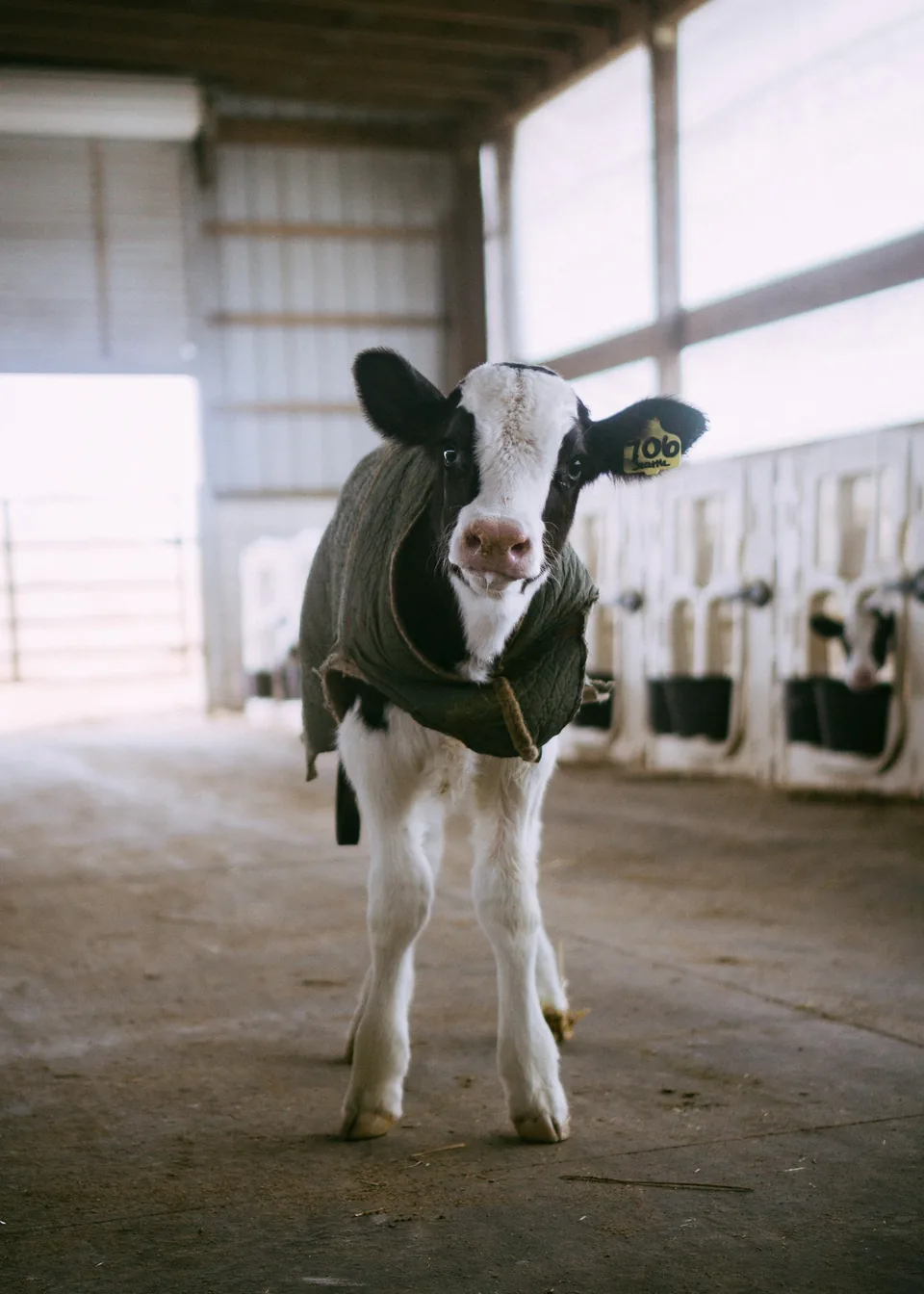
More offspring
from valuable lines.
In Vivo and In Vitro bovine embryo production, controlled-rate freezing, vitrification and transfer to prepared recipients.
 QAZEMBRYOGENETICS FOR FUTURE GENERATIONS
KAZAKHSTAN · SCIENCE · LIVESTOCK
The world's finest genetic lines —
for your herd's next generation.
Qazembryo is a reproductive biotechnology centre based at Nazarbayev University. In Vivo and In Vitro embryos, genomic analysis and a cryobank come together in one livestock development programme.
initial investment
embryos per year · 2029 stage
embryos per year · 2030+ target
Kazakhstan — a future
regional leader
in livestock genetics.
01 / PROJECT
Local science. Regional scale.The Astana laboratory and the Arkalyk genetics centre bring together global genetics, Kazakhstani science and practical farming expertise. The programme is operated by QazEmbryo, a private company in the AIFC.
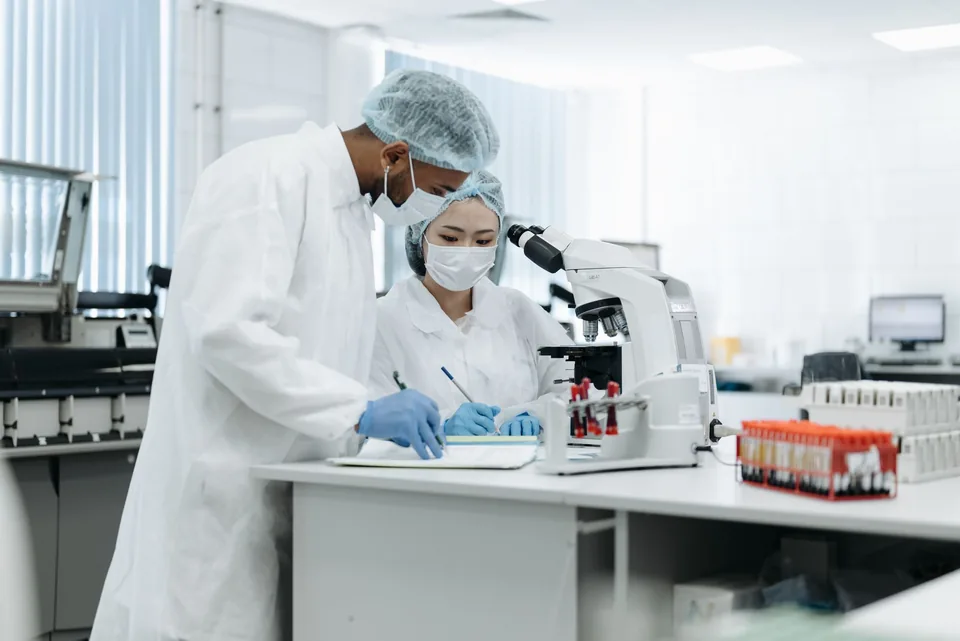
Stage one is a full-cycle In Vivo and In Vitro laboratory: embryo production, oocyte maturation, fertilisation, culture, cryopreservation and transfer to recipients.
Nazarbayev University has provided premises that meet GMP standards, together with all the necessary utilities and technical infrastructure.
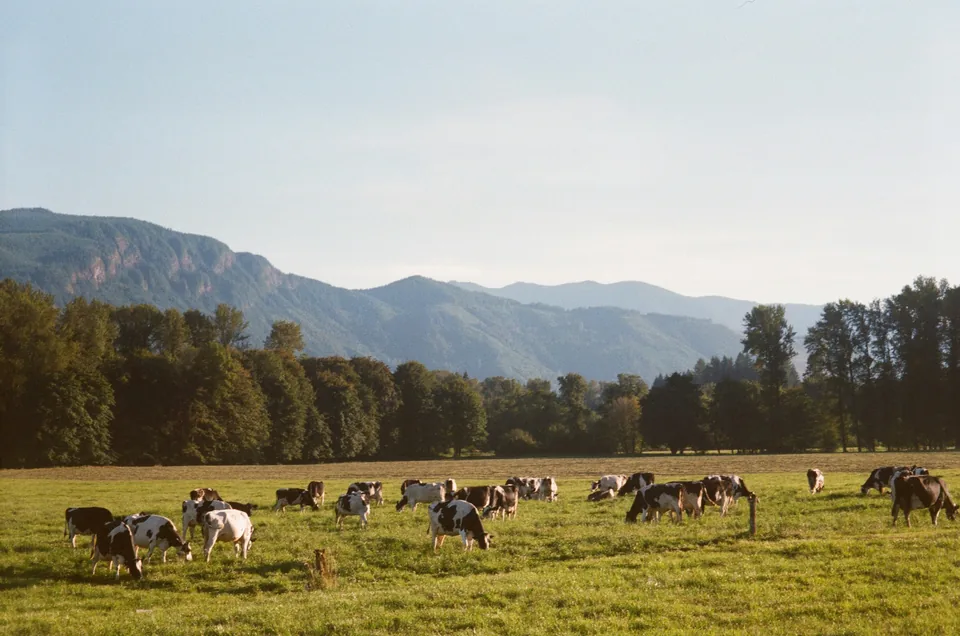
Stage two establishes a genetics centre with a donor herd, a laboratory, genomic evaluation and on-farm programmes. The model combines the centre's own facilities with a network of partner farms.
The centre's programme includes a separate quarantine area, an OPU facility, a veterinary unit and feed infrastructure. Mobile laboratories connect the centre with partner farms.
Scaling to 100,000 embryos per year depends on expanding the donor network and production capacity.
BREEDING PROGRAMME
A nucleus breeding herd and a network of farms support the development of donor lines and the production of valuable biological material.
DEVELOPMENT ROADMAP
Design, equipment procurement and professional development for the team.
Completion of procurement, installation, configuration and laboratory commissioning.
Accreditation and production of up to 2,000 embryos.
First sales and scaling to 10,000 embryos per year.
Target capacity of up to 100,000 embryos per year and exports to 8+ countries.
02 / TECHNOLOGY
Precision in the laboratory. Results on the farm.An embryo carries the genetics of a valuable cow and a selected bull. The recipient cow carries the calf to term.
In Vivo embryos develop inside the donor. In Vitro involves oocyte maturation, fertilisation and culture in the laboratory. Both technologies increase offspring from the best maternal lines and preserve their genetics for beef and dairy farming.
Pedigree and genomic evaluation help select lines for the farm's goals: milk, beef, reproduction and adaptation.
AREAS OF WORK
From selecting genetics to training specialists — a comprehensive programme for herd reproduction and breeding.
In Vivo and In Vitro bovine embryo production, controlled-rate freezing, vitrification and transfer to prepared recipients.
Genomic evaluation, genotyping and monitoring of inbreeding coefficients help select animals and plan matings around farm objectives.
Cryopreservation of semen from breeding bulls, DNA profiling and frozen semen quality control to GOST 26030-2015.
Training in artificial insemination and embryo transfer: courses of up to 40 hours with an interactive electronic handbook.
03 / FOR YOUR FARM
Genetics for your farm's objectives.A genetic programme reflects the breed, husbandry conditions, breeding objectives and economics of each farm.
Multiply valuable maternal lines faster to breed your own replacements. Select genetics for milk yield, fat and protein, udder health and productive longevity.
More offspring from your best cowsMultiply selected maternal lines through a herd of recipients.
Purposeful herd replacementSelection indices, pedigree and inbreeding management.
Measurable progress across generationsTrack milk yield, milk components, health and culling.
Genetics, balanced nutrition, veterinary care and herd management together shape the productivity of the next generation.
04 / POTENTIAL IN NUMBERS
Measure. Verify. Improve.Embryo transfer outcomes depend on embryo quality, recipient preparation and precise transfer technique. Pregnancy checks at defined diagnostic stages measure programme effectiveness.
pregnancies on days 32–35
after ovulation
in the study by Crowe et al.
pregnancies on days 32–35
after ovulation
in the study by Crowe et al.
The 2024 study covered 863 transfers in lactating dairy cows. Pregnancy was assessed on days 32–35 after ovulation.
View the source ↗CALCULATE YOUR SCENARIO
100 transfers × 45% = 45 pregnancies
The calculation shows the number of pregnancies at the selected transfer success rate. The next programme indicators are live births and calf survival.Yield of transferable embryos
Pregnancy rates at diagnostic stages
Live births and calf survival
Genetic merit of offspring
05 / INTERNATIONAL PRACTICE
Technology already in use worldwide.Leading markets combine laboratories, genomic evaluation and farm networks. Kazakhstan needs its own infrastructure to bring these opportunities closer to local farmers.
bovine IVP embryos recorded
in the IETS global report for 2024
In vivo and in vitro bovine embryo production.
The IETS report brings together data from 41 countries.
Donors and recipients are part of a single programme with the laboratory. This network makes it possible to scale production.
Pedigree, genomic indices and adaptation matter more than any single record-breaking trait.
Preserving lines, identifying every batch and managing logistics for farms.
06 / LABORATORY AND CRYOBANK
Quality begins with infrastructure.The equipment programme combines embryology, genotyping and a cryobank. IMV Technologies and Minitube technologies support the laboratory cycle from biological material collection to storage and use on the farm.
Seven equipment categoriesThe specification centres on a controlled environment, precision optics, reliable cryostorage and traceability of every sample.
A veterinary ultrasound system with an OPU probe and needle guide, an adjustable aspiration pump, needles, tubing and a tube heating block. In Vivo embryo recovery kits and transfer catheters.
Outcome: controlled procedures with donors and prepared recipients.A workstation with HEPA filtration and a heated surface, a stereomicroscope for oocyte recovery and embryo evaluation, a phase-contrast microscope (inverted where required for evaluation), micropipettes and heated stages.
Separate areas for sample reception, media preparation and embryology.Tri-gas incubators with CO₂/O₂ control, an independent backup incubation chamber, gas cylinders and regulators, a centrifuge, water bath, heating blocks, refrigerator and freezer.
Validated media, consumables and temperature records.IMV Technologies semen processing line: a programmable Digitcool Alpha freezer and ISevo V2 Alpha Flex for automatic straw filling and sealing. For embryos: controlled-rate freezing and a vitrification kit. The cryobank includes Dewar vessels, separate storage for quarantined material, backup capacity and transport dry shippers.
Nitrogen monitoring, backup storage, batch records and sample location tracking.Temperature, CO₂/O₂ and nitrogen level sensors, media pH and osmolality meters, independent alarms, cryostorage area ventilation, room oxygen sensors and protective equipment.
Emergency procedures and regular instrument calibration.UPS protection for critical equipment and backup power, a water purification system or validated ready-to-use media, sterilisation in line with the adopted protocol, a digital log/LIMS and data backups.
Identification of the donor, biological material, embryo and recipient at every stage.PCR laboratory: DNA extraction and reaction preparation areas, a thermal cycler, centrifuges, pipettes, refrigeration equipment and a sample tracking system.
Genomic analysis, parentage verification and inbreeding management in one breeding programme.07 / REGIONAL MISSION
Our mission is to make Kazakhstan a regional leader in livestock genetics. Two Kazakhstani centres form the foundation for future programmes across Central Asia and the South Caucasus.
The regional programme combines genetic selection, veterinary support and logistics in line with each country's import requirements.
Reducing dependence on imported live cattle and semen. Developing full-cycle laboratories and local production of culture media.
Training embryologists, geneticists and insemination technicians with NU and National Laboratory Astana.
Developing a genomic database, a marketplace for livestock and embryos, IT solutions and TURAN AI agents.
08 / PROJECT PARTNERS
Science. Business. International cooperation.Cattle Breeding Technology Co., Ltd. · Genetics centre · China
09 / PROJECT TEAM
Project management, veterinary medicine, embryology and laboratory infrastructure — expertise across the entire cycle.
Project director
Candidate of Veterinary Sciences. Genetics and biotechnology in livestock production.
Project manager
International cooperation and engagement with project partners.
Laboratory technologist, embryologist
Laboratory equipment and commissioning, equipment oversight and IT infrastructure.
Veterinary embryologist
Donor management, In Vivo embryo production and transfer to recipients.
Embryologist
Oocyte maturation, fertilisation and In Vitro embryo culture.
Embryology laboratory technician
Preparation for embryo culture, controlled-rate freezing and vitrification.
A FEW MORE ANSWERS
Artificial insemination changes the paternal genetics, while your cow remains the calf's genetic mother. Embryo transfer produces offspring from a selected pairing: a donor cow and a bull. The recipient carries the embryo.
The programme begins with an assessment of health, reproduction, nutrition and farm conditions. A group of prepared recipients is selected for the first transfers, then the programme expands based on the results.
High-quality embryos, prepared recipients and precise adherence to protocols determine transfer outcomes. The genetic merit of offspring is realised through balanced nutrition, veterinary support and herd management.
The cryobank development programme focuses on valuable global lines for beef and dairy farming. Selection criteria include pedigree, genomic evaluation, donor health and suitability for the needs of regional farms.
Tell Ansara about your farm: region, production type, breed, herd size and objectives. This will help prepare a discussion with the project team about the programme, recipient requirements and next steps.
YOUR NEXT GENERATION
Tell us what you want your herd to look like in a few years.
Together, we will identify the first step.